Driveways · Walkways · Concrete
Driveway & Concrete Pressure Washing
The largest surface anyone sees when they look at your house. Cleaned evenly — no stripes, no missed edges.
What I’m Removing
Why Central Florida Driveways Go Grey
Most driveways have several things layered on top of each other, and each one needs something different.
- Mildew and algae. Humidity and afternoon storms keep concrete damp for hours, and the pores hold it. That is what turns a driveway uniformly dull.
- Oak and leaf tannin. Wet leaves leach tannin and leave reddish-brown outlines — under a mature canopy, year round.
- Irrigation rust. Orange fan-shaped staining from sprinkler water carrying iron. It is a mineral, not growth, so pressure alone will not touch it.
- Oil and tire marks. Concentrated in the parking area and at the apron.
- Traffic film. A grey haze from tires and road dust that dulls everything evenly, which is why it is easy to stop noticing.
Even Results, Not Wand Marks
Most badly cleaned driveways were not under-washed. They were washed with a narrow tip waved by hand, which cuts arcs into the grime and leaves overlap lines that show as stripes once everything dries.
Flat concrete gets a rotary surface cleaner instead — an enclosed head held at a consistent height and angle, so the whole slab cleans at one rate. Edges and joints get detailed by hand, then everything is rinsed down. Pavers get lower pressure, because the joint sand holding them in place is structural.
The Difference
Concrete & Paver Driveways
Drag either slider to compare. Both Windermere driveways, each cleaned the way its surface called for.
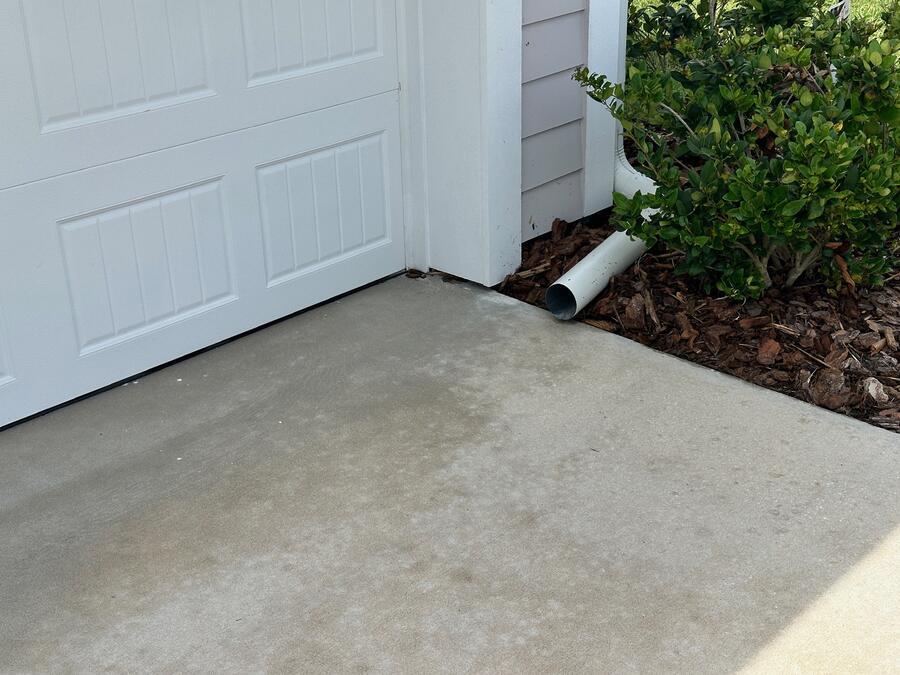
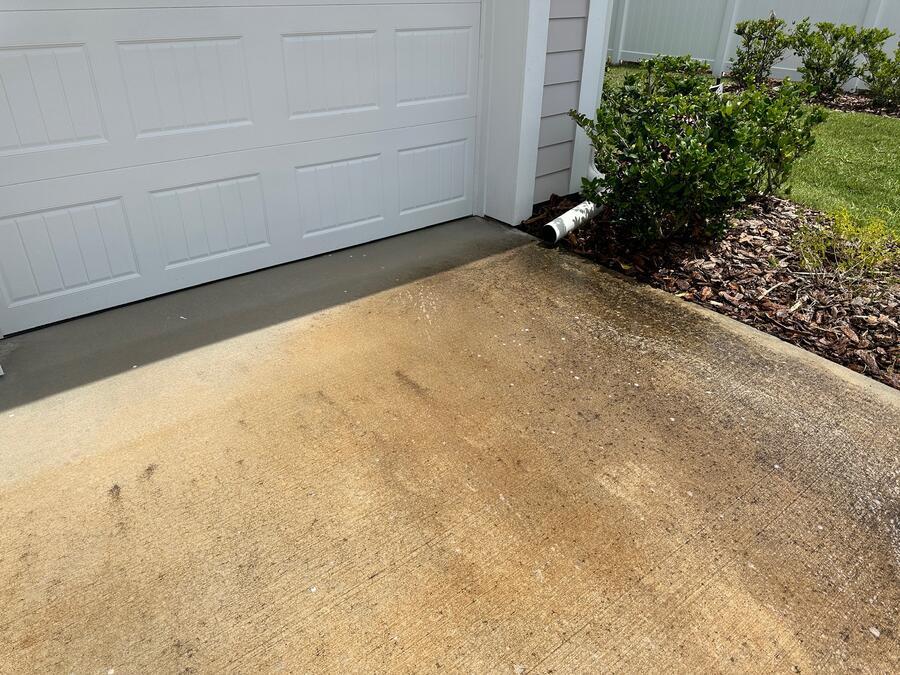
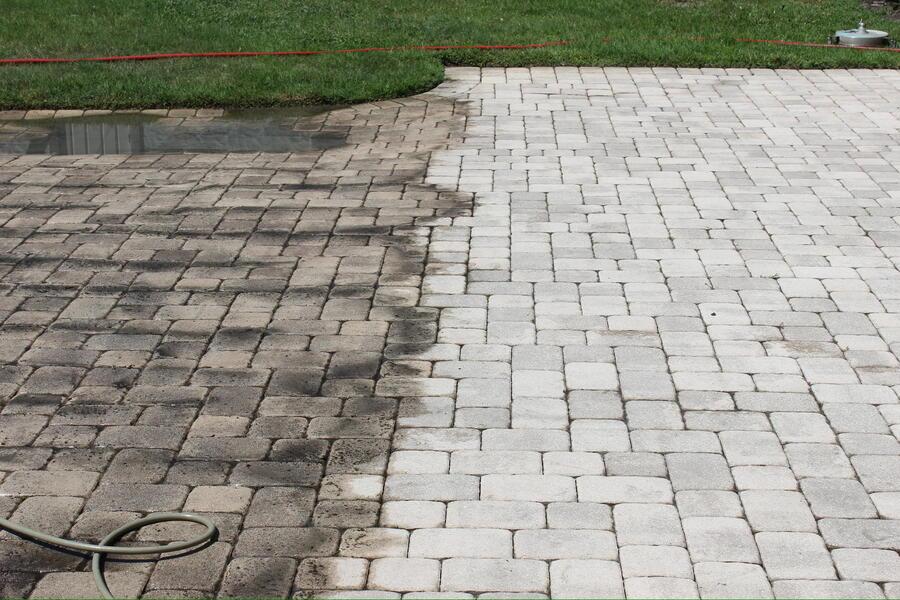
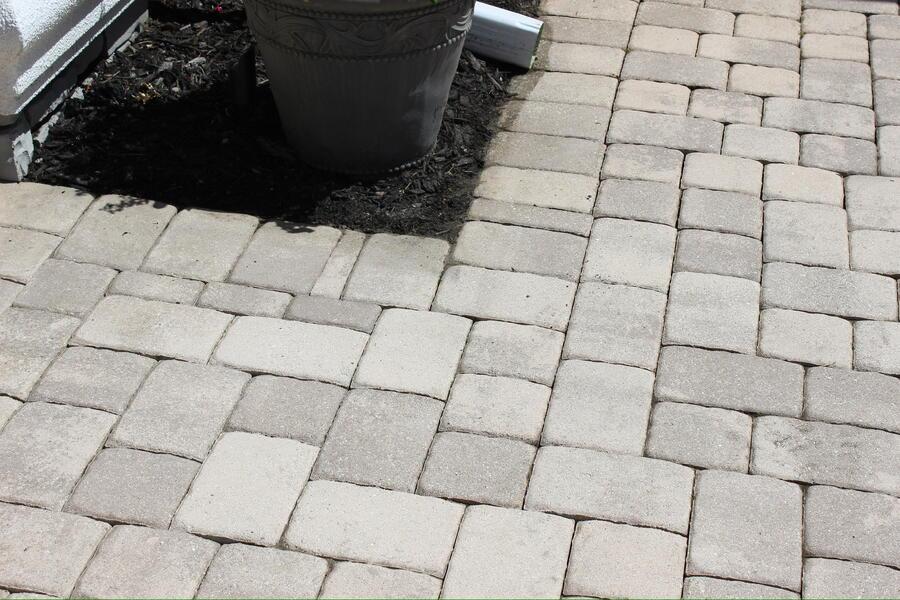
More work in the full before & after gallery.
How It Goes
What a Driveway Visit Looks Like
Walk It With You
We look at it together and I tell you what will come out completely, what will fade, and what I will not promise.
Clear & Pre-Treat
Debris off, edge plantings wetted down, then a pre-treatment on growth and a degreaser on oil so they break down before pressure touches them.
Surface Clean
Even overlapping passes with a surface cleaner, then hand detailing at edges, joints and the apron.
Rinse & Check
The whole slab rinsed so nothing dries back on, landscaping rinsed again, and a walk-through before I pack up.
Common Questions
Questions I Get Asked
Will pressure washing damage my concrete?
Not when the pressure matches the surface. Healthy cured concrete handles a surface cleaner comfortably — the wand marks and zebra striping you sometimes see come from holding a narrow tip too close, not from washing itself.
Older, spalling concrete gets a gentler approach. I would rather leave a little staining than lift the surface off your driveway.
Can you get oil and rust stains out?
Oil responds well to a degreaser and dwell time. A fresh drip usually disappears; a decade-old parking spot usually fades rather than vanishes.
Irrigation rust is a mineral deposit and needs a rust-specific treatment rather than pressure. I will tell you what I expect to get out before I start.
Are paver driveways cleaned differently than concrete?
Yes. Pavers are held in place by the sand in their joints, and full pressure strips it out. They get lower pressure that cleans the face of the stone without excavating the joints. If your joint sand is already low, I will point it out.
Do you need to use my water and electricity?
Just an outside spigot — a standard hose bib supplies plenty. No access inside the house, and no cords run through it.
How often should a driveway in Central Florida be cleaned?
Once a year to once every two years for most homes here. Shade is the biggest variable: a driveway under mature oaks greens up much faster than one in open sun.
How long does a driveway take?
One to three hours for a typical two-car driveway, depending on size and how much staining is present. I will give you a realistic window when I quote it.
Keep Looking
Other Surfaces I Clean
Most driveway visits end up including the walkway and entry too.
Ready to Get Clean?
Book Your
Appointment
Pick a time that works for you — I’ll come out, look at the driveway, tell you what I expect to get out of it, and give you a free quote. No pressure, no hassle.
Booking Calendar Won’t Load
Your browser or network blocked the embedded scheduler. The full booking page still works — open it directly below.
Calendar not showing up? Open the booking page in a new tab instead.
Or call/text (321) 754-0997 — email andrewcrockefeller@gmail.com — or reach out on Instagram or Facebook.